

Building links from relevant websites can strengthen your brand authority, improve referral traffic, and help search engines better understand how your website fits within its industry. The problem is that many website owners now immediately respond to outreach with a placement fee.
That does not mean every quality link has to be purchased.
There are several legitimate ways to earn editorial link mentions from industry-related websites without paying specifically for the placement. The key is to give the website owner a reason to mention your business, resource, research, or expertise.
Instead of approaching link building as a transaction, approach it as a value exchange.
This guide explains practical ways to manage industry-relevant link mentions without relying on placement fees.
Understand Why Website Owners Charge for Links
Before trying to avoid placement fees, it helps to understand why publishers ask for them.
Website owners receive large numbers of outreach emails asking them to add links, publish articles, or update existing content. Reviewing requests, editing articles, maintaining a website, and managing contributors all require time.
Some publishers therefore turn link requests into a commercial service.
However, editorial websites still regularly link to external sources naturally when those sources improve their content.
Your objective is to create situations where linking to your website makes sense editorially.
A useful question to ask before sending outreach is:
Why would this website want to reference my page even if I were not asking for a backlink?
If you cannot answer that question, your outreach will probably struggle.
Target Websites That Are Closely Related to Your Industry
Relevance should be one of the first filters when looking for link opportunities.
A backlink from a website operating within your industry or covering closely related topics is usually more valuable than a random link from an unrelated publication.
For example, a dating coach may look for opportunities on:
- relationship blogs
- lifestyle publications
- psychology resources
- dating websites
- wellness publications
- local lifestyle websites
- marriage and relationship publications
A personal injury information website might instead focus on legal education resources, safety publications, healthcare information websites, local news publications, and related professional blogs.
The closer the relationship between your website and the referring website, the easier it becomes to justify a natural mention.
Create Resources Worth Referencing
One of the strongest ways to earn unpaid mentions is to publish something that other writers actually need.
Generic articles such as “10 Tips for Better Dating” or “5 Ways to Improve Your Marketing” may be useful to readers, but they often give publishers little reason to cite them.
More linkable resources include original statistics, surveys, research summaries, industry data, detailed guides, calculators, checklists, templates, glossaries, comparison resources, and expert commentary.
Suppose you operate in the relationship industry.
Instead of publishing another broad article about first dates, you might create a detailed resource examining dating preferences across different age groups or cities.
A journalist or blogger writing about the same subject now has a legitimate reason to reference your research.
The link becomes supporting evidence rather than a favor.
Offer Expert Insights to Publishers
Expert contribution outreach is one of the most effective methods for securing editorial mentions without paying a placement fee.
Writers constantly need quotes, professional perspectives, and supporting commentary.
If you or someone associated with your business has genuine expertise, offer short insights that complement articles publishers are already creating.
For example, a relationship coach might contribute commentary about:
- dating after divorce
- first-date anxiety
- relationship communication
- dating in your 40s
- modern dating expectations
- long-distance relationships
Instead of asking:
“Can you link to my website?”
Your approach becomes:
“I noticed you’re covering this topic. I work in this space and would be happy to provide a short expert insight if it would be useful.”
If the publisher includes the contribution, an attribution link to the expert’s website often becomes a natural part of the citation.
Contribute Useful Content
Many websites accept outside contributions even if they do not advertise a formal contributor program.
The important part is how you approach them.
Do not lead with the backlink.
Lead with the article.
Find a topic that clearly fits the publication’s audience and fills a gap in its existing content.
Your article should be strong enough that the website owner would consider publishing it even without the link.
If your website contains a genuinely relevant resource, a contextual link can then be included where it naturally supports the discussion.
For example, instead of forcing a link into the author biography, you might reference a detailed study, guide, or supporting article within the content.
That usually produces a stronger and more useful link.
Help Publishers Improve Existing Articles
You do not always need to create an entirely new article.
Many websites have older content that could benefit from updates.
Look for pages containing:
- outdated statistics
- broken links
- outdated references
- incomplete sections
- old screenshots
- missing examples
- obsolete tools or resources
Contact the publisher and point out the specific issue.
Then offer something useful.
You could provide updated statistics, replacement sources, a revised paragraph, newer research, or additional context.
If one of your resources genuinely fits the updated section, the publisher may be willing to include it.
The important distinction is that you are helping improve the page rather than simply requesting a backlink.
Find Broken Links in Relevant Content
Broken-link outreach remains useful when done carefully.
Search industry websites for articles containing links that no longer work.
When you find one, notify the website owner and provide a suitable replacement.
Your own page can be one of the suggested resources if it genuinely covers the same subject.
Avoid sending vague messages such as:
“You have a broken link. Please replace it with mine.”
Instead, identify the exact article, section, anchor text, and broken destination.
Making the problem easy to verify reduces the publisher’s workload and makes your outreach far more credible.
Look for Unlinked Brand Mentions
Sometimes websites already mention your business, product, founder, research, or content without linking to your website.
These are among the easiest link opportunities because the editorial decision to mention you has already been made.
Search for mentions of:
- your brand
- your founder’s name
- proprietary research
- product names
- unique statistics
- interviews
- quotations
If you discover an unlinked mention, politely ask whether the publisher could link the mention to the relevant page so readers can find the original source.
Because the reference already exists, the request is often reasonable.
Build Relationships Before Asking for Anything
Cold outreach works, but relationships make outreach much easier.
Follow writers and publishers in your industry.
Interact with their work when you genuinely have something useful to contribute.
You might:
- comment thoughtfully on their articles
- share their research
- connect on LinkedIn
- provide information when they request sources
- introduce them to another useful expert
- send relevant data without asking for a backlink
Over time, you stop being another unknown person asking for a link.
You become a useful industry contact.
That distinction can dramatically improve your chances of being referenced naturally.
Provide Original Data
Original data is particularly valuable because other publishers cannot easily recreate it.
You do not necessarily need thousands of respondents or a massive research budget.
Small but focused datasets can still be useful.
You might analyze:
- customer trends
- anonymized platform data
- survey responses
- industry pricing
- search behavior
- geographic differences
- yearly changes
- common customer questions
Publish the methodology clearly and make the results easy for writers to understand.
Charts, tables, and concise statistics can make the resource easier to cite.
If bloggers or journalists use your findings, they may link back to the original research as the source.
Participate in Expert Roundups
Some publishers create articles featuring perspectives from several professionals.
These may cover topics such as:
“Relationship experts share their best first-date advice.”
“SEO professionals explain their biggest link-building mistakes.”
“Fitness trainers reveal the most common beginner mistakes.”
If you find relevant roundup opportunities, contribute a concise and distinctive answer.
Avoid generic responses.
A strong contribution should include an observation, example, recommendation, or contrarian insight that gives the publisher something meaningful to use.
Your name, company, and website can then be cited alongside the contribution.
Use Digital PR Instead of Traditional Link Requests
Digital PR focuses on creating stories publishers want to cover.
That might involve:
- original research
- expert commentary
- trend analysis
- local studies
- surveys
- unusual business data
- seasonal insights
- reaction to industry developments
Instead of asking a publisher to insert a link, you give them a potential story.
For example, a dating company could analyze which cities show the strongest interest in certain relationship topics.
A legal information website could analyze public accident statistics by state.
A fitness company might study changing workout trends.
Publishers covering those industries may reference the findings because they contribute something new to the conversation.
Build Relationships With Complementary Businesses
Your competitors are not the only websites operating within your industry ecosystem.
Many complementary businesses serve the same audience without competing directly.
For example, a relationship coach might collaborate with photographers, wedding professionals, therapists, lifestyle bloggers, matchmakers, or fashion experts.
A real estate business might collaborate with moving companies, home improvement bloggers, mortgage educators, interior designers, or local publications.
These relationships can create natural opportunities for interviews, resource pages, collaborative content, expert contributions, and editorial references.
The goal should not be reciprocal link swapping.
Instead, find genuine situations where mentioning each other’s expertise helps the audience.
Create Local Resources
If your business operates in a particular city or region, local content can create additional link opportunities.
You might publish guides covering:
- local statistics
- neighborhood information
- community resources
- local regulations
- regional trends
- city-specific industry insights
Then contact relevant local blogs, community websites, publications, universities, associations, and journalists.
A useful local resource often has less competition than a national topic and may be easier for local publishers to reference.
Offer Interviews
Interviews are another natural source of links.
Reach out to niche blogs, podcasts, newsletters, and publications that interview professionals in your industry.
Instead of pitching your company directly, pitch the knowledge you can provide.
A founder, consultant, coach, professional, researcher, or specialist may be able to discuss lessons learned, industry trends, mistakes, strategies, or unusual experiences.
The resulting interview often includes a company description and website reference.
Give Publishers Something Exclusive
Publishers value information their competitors do not have.
If you have new research, an interesting case study, industry data, or a unique story, consider giving a relevant publication early access.
You could say that you are preparing new research and would be happy to share the findings before publishing them publicly.
Exclusivity gives the writer a stronger incentive to cover the story.
If they use the information, your website can naturally be cited as the source once the full research is published.
Use Testimonials Strategically
If you regularly use legitimate business tools or professional services, consider giving useful testimonials.
Some companies publish customer stories, testimonials, and case studies.
When appropriate, they may reference the customer’s business.
The testimonial must be genuine.
Do not provide fake reviews simply to obtain backlinks.
A thoughtful testimonial describing how you use a product or service can benefit both parties while creating a legitimate brand mention.
Make Your Outreach Specific
Generic outreach is one of the main reasons link-building campaigns fail.
Avoid messages such as:
“I love your website. Can I contribute content?”
Instead, reference a specific page or opportunity.
Explain exactly why you contacted that particular website.
A good outreach message typically addresses three things:
- Why you contacted them.
- What value you can provide.
- Why the proposed resource or contribution fits their audience.
Keep the email relatively short.
Publishers should understand the opportunity within a few seconds.
Do Not Hide Your Intent
There is nothing wrong with wanting visibility and referral links for your website.
However, misleading publishers can damage your reputation.
If you are contributing content on behalf of a client, be transparent where appropriate.
You might explain that you are helping a client build relevant industry mentions and that you believe their resource could add useful context to a particular article.
The difference is that the link should still make editorial sense.
The objective is not to disguise advertising.
It is to identify legitimate situations where your client’s website deserves to be referenced.
Avoid Mass Outreach
Sending thousands of nearly identical emails usually produces poor-quality conversations.
A smaller list of highly relevant websites can be much more productive.
Before contacting a publisher, evaluate:
- topical relevance
- content quality
- publishing activity
- audience alignment
- existing external links
- editorial standards
- whether your proposed contribution actually fits
Then personalize the message around the specific opportunity.
Twenty carefully researched prospects may produce better relationships than hundreds of automated emails.
Track Every Opportunity
Managing link outreach becomes difficult when multiple conversations are happening simultaneously.
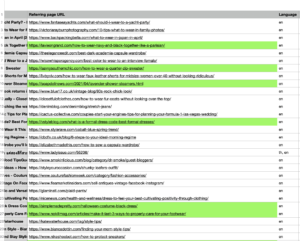
Maintain a simple spreadsheet or CRM containing:
- website
- contact person
- email address
- target page
- outreach angle
- date contacted
- response
- follow-up date
- link status
- live URL
- notes
Also record why each prospect was selected.
For example:
“Article contains outdated source.”
“Journalist frequently quotes relationship coaches.”
“Publication accepts expert contributions.”
“Brand already mentioned without link.”
This makes follow-up easier and helps you identify which outreach strategies produce the best results.
Follow Up Without Becoming Aggressive
Many publishers simply miss the first email.
A polite follow-up can significantly improve response rates.
Keep it short.
You do not need to resend your entire original message.
Briefly remind them about the idea and ask whether it might be relevant.
If there is no response after one or two follow-ups, move on.
Repeated outreach to someone who clearly is not interested can damage your reputation.
Focus on Editorial Value
The easiest way to manage industry link mentions without paying placement fees is to stop treating the backlink as the product.
The real product should be the value you provide.
That value might be:
- expertise
- research
- statistics
- original commentary
- updated information
- useful content
- a unique story
- a replacement for a broken resource
- an introduction to another expert
When publishers benefit from the relationship, links can become a natural result of the collaboration.
Build a Repeatable Link Acquisition System
Unpaid link acquisition works best when it becomes an ongoing process rather than a one-time campaign.
Start by identifying industry-relevant publications and categorizing them based on possible opportunities.
One website might be appropriate for expert commentary.
Another may have outdated content.
Another might publish interviews.
Another may frequently cite research.
Another might accept contributor articles.
Instead of sending the same pitch to everyone, match the outreach method to the publisher.
Over time, you can build a network of editors, journalists, bloggers, and business owners who already know your name and understand what you can contribute.
Those relationships often become more valuable than any individual backlink.
Frequently Asked Questions
Can you get backlinks without paying for them?
Yes. Websites regularly link to outside resources when those resources provide useful information, research, expert commentary, statistics, or supporting evidence. The key is giving publishers an editorial reason to mention your website.
What is the best way to get links from industry-related websites?
There is no single method that works for every website. Expert contributions, original research, content collaboration, broken-link outreach, digital PR, unlinked brand mentions, and resource creation can all generate relevant mentions.
Should I pay a website that asks for a placement fee?
That depends on your marketing strategy, but paying specifically for links may create search engine policy and disclosure considerations. If your objective is earning editorial links, focus on opportunities where the publisher chooses to reference your website because the resource adds value.
How do I convince a website owner to link to my content?
Do not focus on convincing them. Give them a legitimate reason to reference your page. Create a better resource, provide original research, contribute expert commentary, fix an outdated reference, or help improve their existing content.
Does industry relevance matter when building links?
Yes. Industry relevance helps make the mention more natural for readers and creates stronger contextual relationships between websites. A relevant editorial mention can also send more qualified referral traffic than a random link from an unrelated website.
How many outreach emails should I send?
Quality usually matters more than volume. Focus on websites where you can identify a clear reason for contacting the publisher. Personalized outreach to a carefully researched list is generally more productive than large-scale generic campaigns.
Can content collaboration generate backlinks?
Yes. Contributing genuinely useful content to an industry publication can create natural opportunities to reference relevant resources from your website. The link should support the article rather than being inserted solely for SEO purposes.
How long does unpaid link building take?
Editorial link acquisition can take longer than simply purchasing placements because it depends on research, outreach, content quality, and publisher relationships. However, the relationships and editorial mentions generated through this approach can continue producing opportunities long after the original campaign ends.




[…] I discussed in my guide on building industry-relevant link mentions without paying placement fees, carefully researched prospects and highly relevant outreach often create better conversations than […]
[…] That is also why I focus on earning contextual editorial mentions rather than simply chasing arbitrary authority scores in my guide on building industry-related links without placement fees. […]
[…] This is the same principle I discuss in my guide to building relevant links without paying placement fees. […]
[…] RankYourPage guide explains how businesses can earn relevant website mentions through expert contributions, useful resources, original insights, and genuine […]
[…] article on earning industry-related link mentions without paying placement fees explains how expert contributions, useful resources, interviews, and original information can help […]
[…] guide explains how service businesses can earn relevant website mentions through expert contributions, helpful resources, original insights, and professional […]
[…] guide to earning relevant local and industry website mentions provides additional strategies for building visibility through expertise, useful resources, and […]
[…] I discuss the value-first approach in my guide on how to manage industry-related link mentions without paying placement fees. […]
[…] The process fits particularly well with the approach I describe in my guide on how to manage industry-related link mentions without paying placement fees. […]
[…] guide on earning industry-related link mentions without paying placement fees discusses why useful resources, expert insights, and genuine value exchanges can lead to more […]